
Natural perfume for sensitive skin: how to choose (and what to look for on labels)
Updated: Mar 2
Exploring Natural Perfumes for Sensitive Skin
If you love beautiful scents but have sensitive skin, you might have found that many perfumes, even those labelled “natural,” can sometimes feel irritating or overwhelming. The good news is that with the right understanding and careful ingredient awareness, you can enjoy natural fragrances that are gentle, thoughtful, and wearable.
This post will walk you through what to look for, what to avoid, why IFRA guidelines matter, what to check on labels, and how to choose natural perfumes that are more likely to sit comfortably on sensitive skin.
Why Sensitive Skin and Fragrance Can Be Tricky
Sensitive skin doesn’t have a single cause. What irritates one person may not affect another. In the world of fragrance, sensitivity often relates to how the skin reacts to certain compounds within essential oils and absolutes, or to the way a perfume is formulated and applied.
Common reactions include:
Redness and irritation
Itchy or burning sensations
Delayed allergic responses
Phototoxic sensitivity (especially with certain citrus oils in sunlight)
That’s why a natural perfume isn’t automatically “safe for all sensitive skin” unless it’s been formulated with those factors in mind.
What Are IFRA Standards and Why They Matter
The International Fragrance Association (IFRA) sets widely recognised safety guidelines for fragrance ingredients, including essential oils and isolates used in perfumery. IFRA Standards help ensure that known sensitising or phototoxic ingredients are used within safe concentration limits.
When a natural perfume is formulated with awareness of IFRA guidance, it’s more likely to be safer for a broader range of wearers.
What to Look for on Labels if You Have Sensitive Skin
When shopping for a natural perfume for sensitive skin, label reading becomes more important. Here are some key aspects to consider:
1. Full Ingredient Listing (INCI)
Look for a clear list of ingredients using INCI names. Vague terms like “fragrance” or “essential oils” without detail make it hard to avoid specific triggers.
2. Recognisable Botanical Names
Botanical names such as Rosa damascena (rose otto), Citrus aurantium bergamia (bergamot), and Jasminum grandiflorum (jasmine) give you insight into what’s in the scent so you can gauge what your skin may tolerate.
3. Alcohol Base or Oil Base?
Perfumes formulated with gentle carriers (like fractionated coconut oil or jojoba oil) can feel softer on sensitive skin than strong denatured alcohol bases.
4. Allergen Awareness
Certain natural constituents like linalool, limonene, citronellol, and geraniol are common sensitisation triggers—even though they are naturally occurring. Brands that transparently note major constituents or offer guidance on sensitivities are more helpful.
Patch Testing: Your Best First Step
Before you spritz any new perfume, especially if you have sensitive skin, follow these steps:
Apply a small amount on the inner forearm or behind the ear.
Leave it unwashed for 24–48 hours, observing for delayed reactions.
If you’re clear, then try a light application elsewhere.
This step dramatically reduces the chance of full-day irritation.
Phototoxic Oils and Sensitive Skin
Certain citrus oils, especially expressed citrus oils such as cold-pressed bergamot or lime oils, can be phototoxic (react with sunlight to irritate skin). If you’re outdoors frequently, especially in the sun, check whether phototoxic oils are present and whether they’ve been used within IFRA-approved limits.
Learn more about IFRA and phototoxicity here: https://ifrafragrance.org/initiatives-positions/safe-use-fragrance-science/ifra-standards?
Choosing Gentle Natural Perfumes: Key Principles
Here’s a quick checklist for sensitive skin:
✔ Choose products with transparent ingredient lists (INCI)
✔ Look for formulations that follow IFRA guidance
✔ Prefer oil-based or gentler alcohol blends
✔ Avoid repeatedly touching or rubbing scent into skin
✔ Consider light application on clothing first
✔ Patch test before regular use
Natural Perfumes for Sensitive Skin...A Little About Rose & Co
At Rose & Co. Botanicals, our natural perfumery ethos is rooted in clean, botanical ingredients thoughtfully selected for their beauty and character. Our parfums are Australian-made and crafted with consideration for wearable balance, clarity, and skin comfort. We recommend starting with a light application and patch testing if you have sensitive skin.
Our range features compositions that sit close to the skin with subtle lift and warmth, perfect for those seeking elegant, plant-centric fragrance experiences.
Relevant Australian Regulations
In Australia, cosmetic products, including perfumes, are overseen under the AICIS (Australian Industrial Chemicals Introduction Scheme), which regulates the chemicals used in imported or manufactured cosmetics, including fragrance components: https://www.industrialchemicals.gov.au/cosmetics-and-soap?utm_source=chatgpt.com.
Unlike the EU, Australia does not require the same mandatory fragrance allergen disclosures on cosmetic labels; however, responsible brands may still offer this information voluntarily as part of transparency and safe use.
Additionally, the Therapeutic Goods Administration (TGA) clarifies that products marketed purely for fragrance generally fall outside therapeutic classifications—but brands must avoid therapeutic claims (e.g., “treats anxiety”) unless approved. For guidance on classification, visit: https://www.tga.gov.au/resources/guidance/determining-if-your-product-cosmetic-or-therapeutic-good.
Final Thoughts
If you have sensitive skin, natural perfume can still be a joyful and wearable experience—especially with mindful formulation, careful label reading, proper patch testing, and an understanding of how your own skin responds.
Approach scent with curiosity, but not haste; and consider natural fragrances formulated with integrity and transparency as a fine personal expression rather than an everyday commodity.
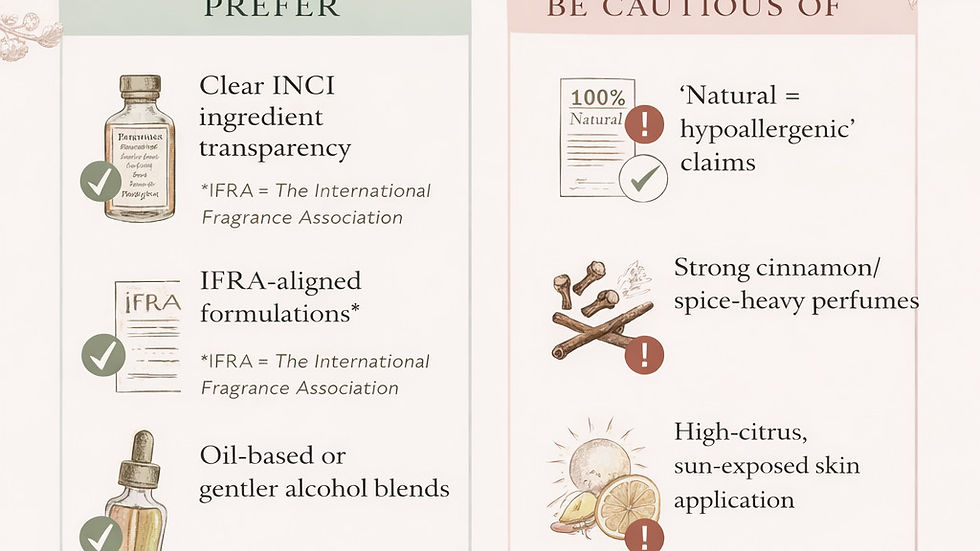
Choosing a Natural Perfume for Sensitive Skin: A Quick Checklist
Prefer
IFRA-aligned formulations (ask the brand)
Clear ingredient transparency
Lower application amounts / “skin scent” style
Patch testing and clothing application
Be Cautious With
Strong cinnamon/clove/spice-heavy perfumes (often higher sensitisation risk)
High-citrus, sun-exposed skin application
Overuse and frequent reapplication
“Natural = hypoallergenic” claims (not necessarily true)
References and Key Resources
IFRA Standards (safe use of fragrance): https://ifrafragrance.org/initiatives-positions/safe-use-fragrance-science/ifra-standards
Using the IFRA Standards: https://ifrafragrance.org/using-the-standards
AICIS – Cosmetics and soap overview: https://www.industrialchemicals.gov.au/cosmetics-and-soap
AICIS – Flavour and fragrance chemicals (AU): https://www.industrialchemicals.gov.au/cosmetics-and-soap/flavour-and-fragrance-chemicals
AICIS – Personal care and cosmetic products: https://www.industrialchemicals.gov.au/cosmetics-and-soap/personal-care-skincare-make-and-other-cosmetic-products
TGA – Cosmetic vs therapeutic good guidance (AU): https://www.tga.gov.au/resources/guidance/determining-if-your-product-cosmetic-or-therapeutic-good
TGA – Guidance for advertisers and suppliers (PDF): https://www.tga.gov.au/sites/default/files/2024-06/cosmetics-therapeutic-goods-guidance-for-advertisers-suppliers.pdf
EU – Fragrance allergens labelling explainer: https://single-market-economy.ec.europa.eu/sectors/cosmetics/cosmetic-products-specific-topics/fragrance-allergens-labelling_en
EU Regulation amending Annex III (example legislative update): https://eur-lex.europa.eu/legal-content/EN/TXT/PDF/?uri=CELEX%3A32023R1545


Comments